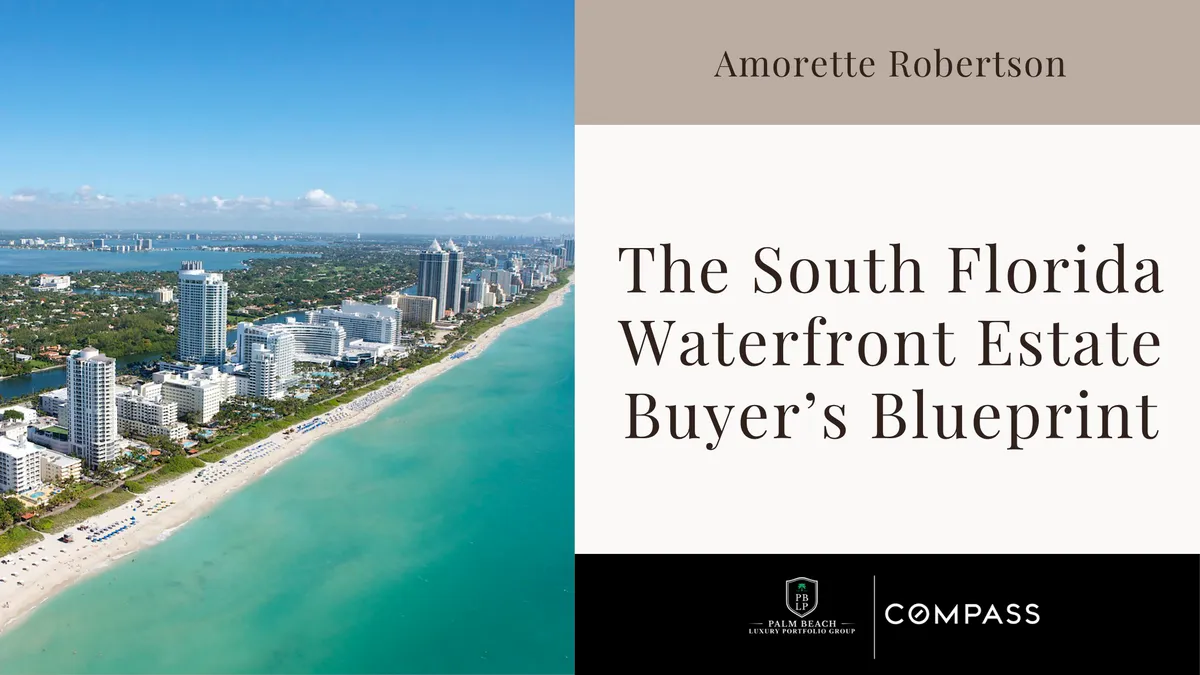
The South Florida Waterfront Estate Buyer’s Blueprint: Seawalls, Riparian Rights, and Superyacht Moorings
By Amorette Robertson | South Florida Luxury Waterfront Series
Acquiring a trophy waterfront residence in South Florida represents the pinnacle of coastal living. Yet behind breathtaking panoramic vistas of the Intracoastal Waterway or Biscayne Bay lies a complex regulatory and marine engineering framework that discerning buyers must navigate before signing.
From Palm Beach to Key Biscayne, not all waterfront footage carries equal privilege. Navigational accessibility, bridge clearances, deep-water dockage capacity, and municipal environmental protections dramatically influence property values and maritime lifestyle convenience.
The Geometry of the Dock: Draft, Setbacks, and Slip Permits
For yachting connoisseurs, water frontage measurement is merely the first coordinate. Critical considerations include:
Controlling Low-Tide Depth: A dock claiming deep water during high tide may harbor shoaling hazards during spring low tides. Determining true MLW (Mean Low Water) draft along the canal to open water is imperative for yachts exceeding 60 feet.
Dockage Projection & Shoreline Setbacks: Florida DEP and the U.S. Army Corps enforce strict dock guidelines, preventing encroachment within 10 to 25 feet of property lines or past 25% of canal width.
Shore Power Infrastructure: Superyachts demand 100-amp single-phase or 480-volt 3-phase commercial pedestals, requiring on-site transformer capacity.
Key Due Diligence Metric: Fixed Bridges vs. Direct Ocean Access
"No Fixed Bridges" ensures unobstructed passage for tall flybridges and masts to ocean inlets (Port Everglades, Government Cut, Lake Worth Inlet). A single 55-foot bridge caps vessel size permanently.Riparian Rights and Submerged Land Leases
In Florida, sovereign submerged lands belong to the public trust. Property owners enjoy riparian rights—the qualified legal right to ingress, egress, boating, and scenic enjoyment. If your estate borders an engineered basin or sovereign submerged canal, verify whether private dockage requires an ongoing lease with the state Board of Trustees of the Internal Improvement Trust Fund (TIITF), or if riparian rights extend cleanly without third-party encumbrances.
Seawall Integrity and Cap Elevation Standards
Your seawall is the primary defensive bulwark of your estate's foundation. Across Miami-Dade, Broward, and Palm Beach counties, coastal resilience mandates have raised seawall cap heights to +5.0 to +6.0 feet NAVD88.
Structural King Piles & Batter Piles: Older concrete seawalls frequently suffer from spalling and subterranean rebar corrosion. A comprehensive marine inspection by a licensed diver and coastal structural engineer is non-negotiable.
Return Walls & French Drains: Proper drainage hydrostatic relief panels prevent saturated ground pressure from destabilizing retaining bulkheads during tropical weather events.
Complimentary Waterfront Estate Inspection Checklist
Planning a waterfront acquisition in Palm Beach, Broward, or Miami-Dade? Request our proprietary South Florida Deep-Water Yachting & Seawall Verification Guide, complete with bridge clearance charts and trusted marine engineer directories.
Amorette Robertson
Broker-Associate
Senior Luxury Portfolio Advisor
+1 305.496.8218